What Do Left and Right Mean in Politics?
Every election season, Nigerian politicians promise to fight corruption, remove bad leaders and bring change. Some even call themselves progressive. Yet after the elections, they implement the same policies as those they replaced, and sometimes even join the parties they previously condemned.
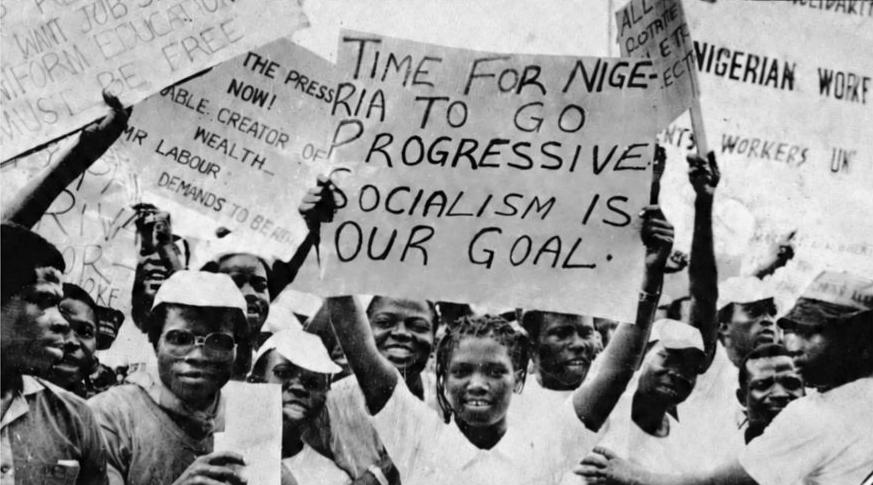
This has led some Nigerians to argue that there is no left or right in Nigerian politics, only “what works”. Others ignorantly dismiss left-wing politics as a Western concept that has no place in Nigeria. But this ignores both what left-wing politics means and Nigeria’s own history of political struggle.
What do left and right politics mean?
Simply put, the left is the broad political current that challenges inequality, exploitation, oppression and existing structures of power. It fights for workers’ rights, economic justice, democracy and a society organised around the needs of the majority.
The right, on the other hand, generally defends existing hierarchies, private property, established privileges and the interests of those who control wealth and political power.
The left includes progressives, socialists, trade unionists, feminists, radical students, anti-colonial activists and pro-democracy campaigners who challenge inequality and oppression. But the left is not united on how society should change. Some seek reforms within the existing system, believing that better policies, stronger institutions and greater redistribution can improve people’s lives.
The revolutionary left, of which we as Marxists are a part, argues that reforms alone cannot end exploitation because the economic and political power of the ruling class remains intact. For us, liberation requires a revolutionary transformation of society, with the working class taking control of the economy and the state.
Nor is calling oneself progressive enough. A politician may condemn corruption while defending the very economic system that concentrates wealth and power in the hands of a few. What matters is not merely what politicians say, but whose interests their politics serve.
Nigeria has always had a left
The Nigerian left did not begin with social media, NGOs or young people reading Western political theory. It emerged from the struggles of Nigerian workers, students and ordinary people against colonial rule and exploitation.
In 1945, Nigerian workers organised a nationwide general strike against British colonial rule, demanding better wages and living conditions. The Zikist Movement, radical youth organisations and trade unionists connected the struggle for independence with demands for social justice and an end to colonial domination.
After independence, the left continued organising. The Socialist Workers and Farmers Party emerged in 1963, while the 1964 general strike demonstrated the power of organised labour. Students and progressive organisations also opposed the Anglo-Nigerian Defence Pact, demanding genuine independence from British military influence.
Under military dictatorship, the left remained active despite repression. Trade unionists, students, socialists and pro-democracy activists challenged military rule, structural adjustment and attacks on workers. During the June 12 struggle, organisations such as the Campaign for Democracy helped mobilise Nigerians against dictatorship.
This history was not imported from the West. It was built by Nigerians confronting the conditions under which they lived.
Where is the left today?
The Nigerian left is weaker and more fragmented than it once was, but it has not disappeared. Military repression played a part, but so did failures within the left itself. Sections of the revolutionary left abandoned independent class politics to work within bourgeois nationalist and pro-democracy movements, treating the removal of military rulers or the achievement of civilian government as ends in themselves. Others reduced politics to immediate bread-and-butter demands, separating those struggles from the revolutionary transformation of society. Without theoretical clarity and the unity of theory and practice, the left repeatedly found itself fighting alongside the bourgeoisie without building the independent political power of the working class.
Yet the left survives in trade unions, student organisations, feminist movements, socialist groups and community campaigns. What is largely absent from Nigeria’s dominant political parties is any meaningful disagreement over the economic system. The APC and PDP quarrel over who governs, but both broadly accept privatisation, market-led development and the dominance of domestic and foreign capital.
So when someone says there is no left or right, only “what works”, the question should be: works for whom? A policy that enriches investors may impoverish workers. A government can fight corruption while protecting the very class relations that reproduce inequality.
The Nigerian left has a history, a tradition and a continuing role. Its present weakness does not erase that history. Rather, it shows why independent political organisation and theoretical clarity remain essential, particularly for its revolutionary wing.
The left is NOT a Western invention. It is part of Nigeria’s own history of resistance, from colonialism to the struggles of workers, students and ordinary Nigerians today.
The Naija Marxists stand within that tradition, as part of the revolutionary left, with the working people of Nigeria, fighting not merely to reform the existing system but to fundamentally transform it.
If that is where you stand too, join us!