ReMarx: Who Is the Comprador Bourgeoisie?
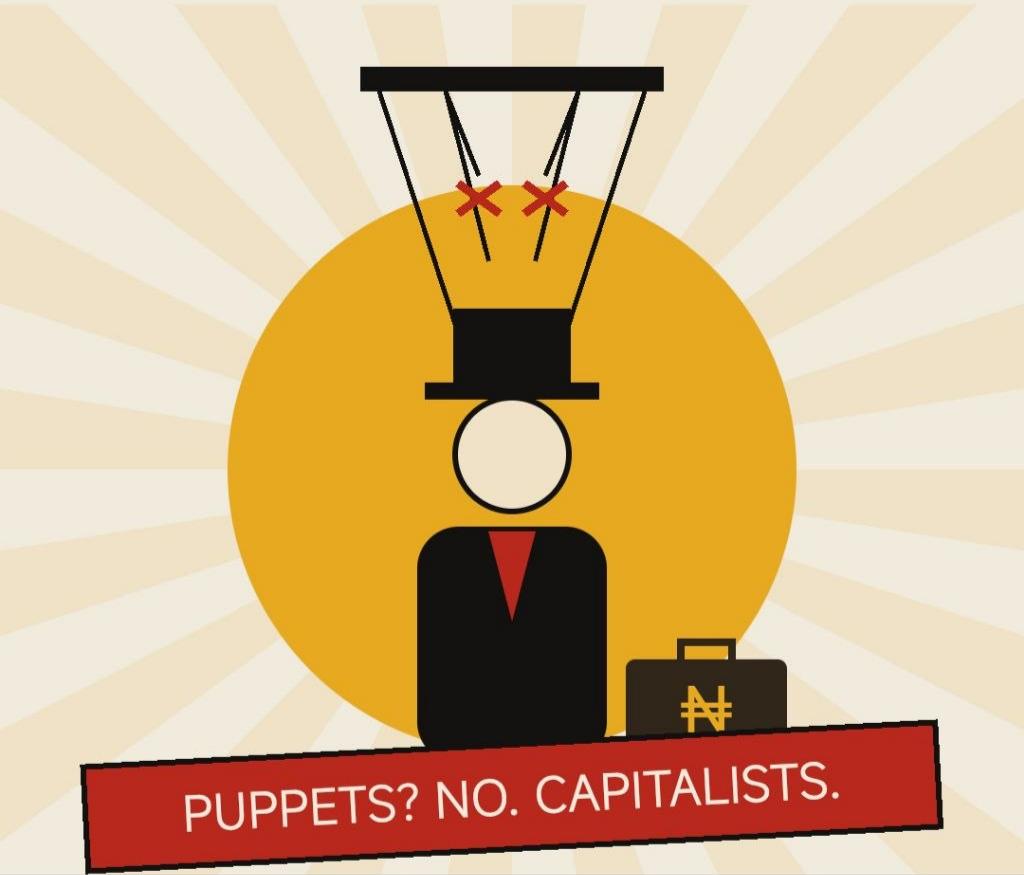
When discussing imperialism in Africa, some tendencies argue that our leaders are puppets of Western powers and that removing the comprador bourgeoisie would liberate our countries. But who exactly are these compradors? How do they differ from the national bourgeoisie, and can replacing one with the other end exploitation?
Who are the comprador and national bourgeoisie?
We as Marxists distinguish between different sections of the capitalist class according to how they accumulate wealth and their relationship with foreign capital. The comprador bourgeoisie historically emerged as intermediaries between foreign capital and local economies. They help foreign companies acquire raw materials, distribute imported goods and penetrate domestic markets. Their wealth depends heavily on these relationships.
The national bourgeoisie, meanwhile, consists of domestic capitalists with substantial interests in nationally controlled production, industries and markets. They can, because of their interests, oppose foreign competition, demand protective tariffs or seek government support to strengthen their businesses.
These distinctions do not mean that the two are separate social classes. Both accumulate capital, pursue profits and exploit the working class. Their differences concern how they accumulate wealth and their relationship with foreign capital.
During the Chinese Revolution of the 1920s, these contradictions were examined extensively. China had powerful commercial intermediaries connected to foreign capital, alongside domestic industrialists seeking greater control over Chinese markets. However, these industrialists also depended on foreign finance and feared the growing power of workers and peasants!
This informed an important point: it would be naive to imagine that there is an enormous gulf between the comprador and national bourgeoisie. The national bourgeoisie could oppose foreign domination while collaborating with imperialist capitalists against revolutionary movements! Their economic interests sometimes are different, but both remain committed to capitalist ownership, accumulation and exploitation!
Nor are these identities fixed, because a comprador capitalist can accumulate wealth through foreign trade and then invest in creating domestic factories, becoming a national industrialist. Equally, a national industrialist can abandon local production and concentrate on importing and distributing foreign goods when those activities become more profitable! Both interests can even coexist within the same business. What matters is the dominant character of their economic activities and their relationship with foreign capital at a particular historical moment.
The comprador bourgeoisie are therefore not necessarily puppets. They are capitalists who benefit from their relationships with foreign capital and possess interests of their own.
Where does Nigeria fit into this?
Yes, under colonialism, the foreign companies dominated important sections of banking, trade and industry and the Nigerian merchants participated in these commercial relationships, while the indigenous industrial capital remained relatively weak.
But our bourgeoisie did not remain in that position. In 1972 and 1977, the Nigerian state introduced indigenisation policies that restricted foreign ownership and reserved certain businesses for Nigerians. Foreign companies were required to transfer shares to Nigerian investors or enter partnerships with indigenous capital. Banking was also affected, with the state acquiring significant interests in formerly foreign-controlled institutions.
If Nigerian capitalists were simply puppets of foreign capital, how do we explain these policies? These were real conflicts over economic ownership and control. The Nigerian capitalists wanted a greater share of businesses and profits which were previously dominated by foreign interests. Yet indigenisation also enriched the politically connected businessmen, while dependence on foreign finance, technology and markets continued.
We can still see these competing interests in Nigeria today. Aliko Dangote moved from importing cement into domestic manufacturing, benefiting from policies protecting local production, while Cletus Ibeto, whose business was heavily involved in cement importation and bagging, opposed the restrictions that affected his operations.
These are Nigerian capitalists fighting over control of the same market. Dangote’s industrial interests favoured restrictions on imports, while Ibeto’s commercial interests were threatened. Yet Ibeto also pursued domestic manufacturing, demonstrating how a capitalist’s economic position can change.
Nigerian banking capital is another example. Major Nigerian-owned banks control substantial financial resources and operate across African markets, yet they also finance imports, oil exports and transactions involving multinational corporations. The Nigerian state helps organise these relationships. It can protect domestic manufacturers, encourage foreign investment or favour commercial importers. The Nigerian state itself is an institution through which capitalist interests exercise power and compete.
Nigeria therefore has both national and comprador bourgeois interests, which are often intertwined within the same businesses and financial institutions. Nigerian capitalists have developed substantial productive and financial power, but their accumulation remains closely connected to international capitalism. Nigeria’s ruling class consists of capitalists with their own interests, contradictions and relationships with foreign capital. Understanding those relationships requires an analysis of class and economic power, rather than a conspiracy theory in which every domestic decision is dictated from abroad.
So would removing the comprador bourgeoisie liberate Nigeria?
Suppose every foreign-connected capitalist was replaced by a Nigerian industrialist; would workers automatically receive higher wages? Would the wealth produced in Nigerian factories suddenly belong to those who work in them? History gives us answers. The indigenisation policies increased Nigerian ownership without abolishing exploitation or the concentration of wealth. A struggle for greater national control of capital is not necessarily a struggle to abolish capitalist exploitation.
The distinction between comprador and national bourgeoisie helps us understand the conflicts within Nigerian capitalism, but neither fraction stands outside capitalism, and replacing one with the other will not fundamentally transform our society.