ReMarx: Who Are the Proletariat?
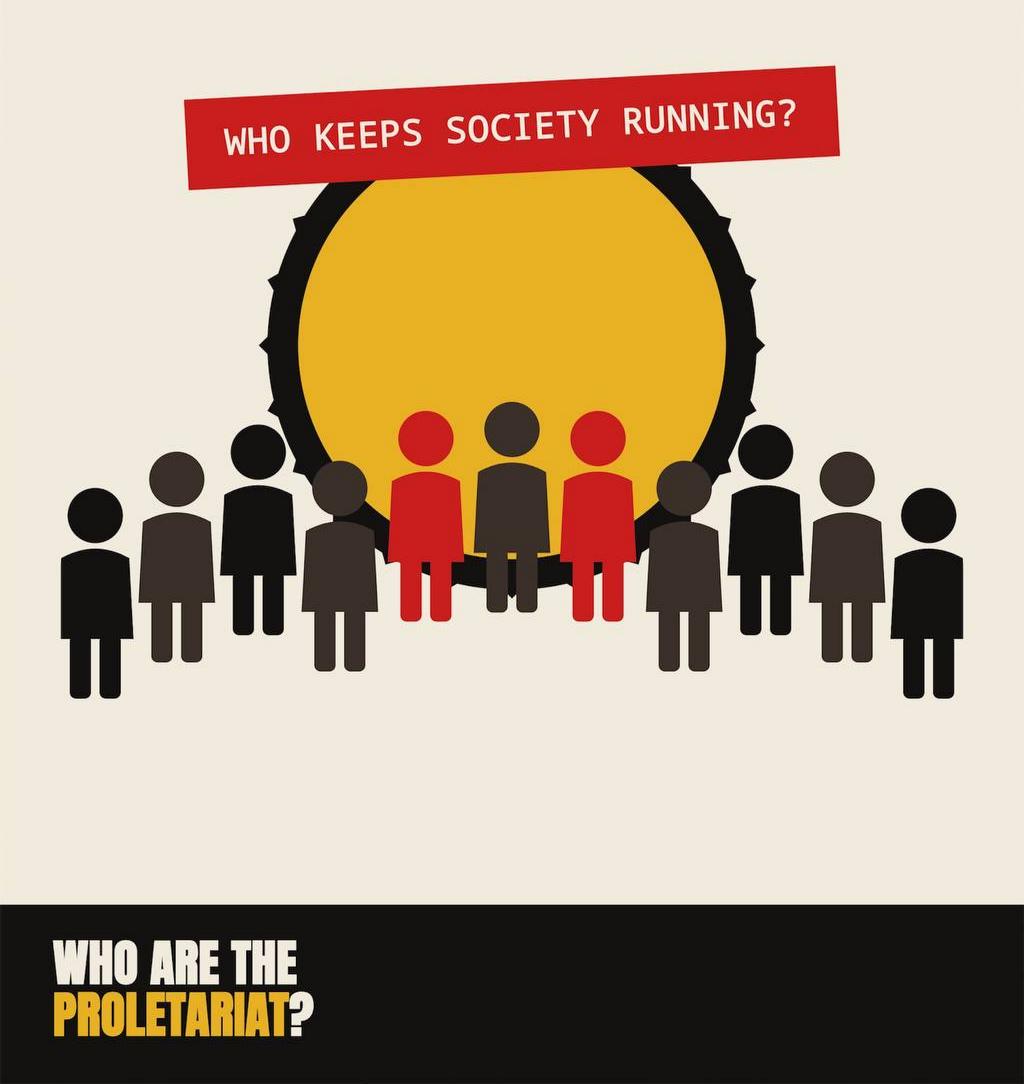
Who are the proletariat, and why do Marxists say they are the force to change society?
The proletariat is not simply “poor people”, neither is it just everybody earning below a certain amount. And owning an iPhone does not automatically make you bourgeoisie or capitalist, relax. Class is not a suffering competition either. It is not about who has the worst salary, who wears a suit, who speaks with an accent, or who says “let’s circle back” in meetings.
For Marxists, class is about our relationship to work and ownership.
The proletariat are people who do not own enough land, tools, businesses, factories, offices, banks or other productive property to live from it, so they have to sell their ability to work in order to survive.
That includes the cleaner, teacher, nurse, factory worker, bank worker, security guard, office worker, driver, call-centre worker and delivery rider. A person on ₦70,000 and another on ₦700,000 may live very differently, but if both need a boss, company, state institution or platform to keep paying them in order to survive, both are workers, both are the proletariat.
In Marxist terms, class describes your position within the social relations through which production is organised. The capitalist class owns or commands the means of production as capital. Capitalists purchase labour-power, direct production and appropriate the surplus produced through workers’ labour. The proletariat occupies the opposite position. Workers do not possess independent access to the means of production on a scale that allows them to reproduce themselves without entering the labour market. They must therefore sell their labour-power, their physical and mental capacity to work, to an employer in return for wages or salaries.
The question then is: do you live mainly by owning capital, or by working for someone who owns it?
But Nigeria has a huge informal and unemployed population, does that mean they are outside the working class?
No.
The unemployed graduate searching for work, the person doing occasional gigs, the rider paid per delivery, the worker moving between short contracts, and the person pushed into “any small hustle” are part of what Marx called the reserve army of labour. They are workers capitalism does not currently employ securely, but keeps available, desperate and competing for jobs.
That is useful for employers. When a worker asks for better pay, the boss can say: “If you don’t like it, plenty people are outside.” Capitalism creates unemployment and insecurity not because there is no work to do, but because doing necessary work is not always profitable enough for those who own capital.
You can see this in Nigeria. The country needs homes, hospitals, teachers, roads, public transport, electricity, drainage, food processing and care workers. Yet millions are unemployed or underemployed. So the problem is not that people are lazy. The problem is that the system only provides work when someone can make profit from it.
Not every informal worker is automatically proletarian. A trader selling their own stock or a tailor with their own machine may be a small proprietor or petty bourgeoisie. But a dispatch rider controlled by an app, a domestic worker paid daily, or a market assistant working for a shop owner may be a worker without formal protection. “Be your own boss” is very sweet until the app cuts your pay, controls your work and deactivates you before 12am.
So Why Do Marxists Say Workers Are Revolutionary?
We do not regard workers as revolutionary because workers are morally purer, more intelligent or poorer than everybody else, but because they keep society running!
Workers produce, transport, teach, clean, heal, build, sell, cook and communicate. When workers stop, society stops. Even the billionaire who says he “built everything himself” cannot do all of this personally. He will need workers before lunchtime!
Workers possess revolutionary potential because of their collective position within capitalist production! And Nigeria has seen this power. From the 1945 general strike to the 2012 fuel-subsidy protests and strikes, workers have shown that organised action can shake governments and force concessions. #EndSARS also showed how young workers, students, unemployed people and informal workers can organise collectively against state violence and injustice.
The point is simple: the people who make Nigeria work can organise to make Nigeria work for the majority, not for billionaires, oil companies, contractors and political godfathers.
So Are Workers Automatically Revolutionary?
No. A class position creates a potential basis for collective struggle. It does not automatically produce class consciousness, socialist politics or revolutionary organisation. Workers can accept ruling-class ideas. They can oppose strikes, support reactionary politicians or blame other ethnic, religious and oppressed groups for their problems, and Nigeria is a good example of this.
Capitalism also divides workers. Workers compete for jobs, promotions, contracts and access to scarce resources. They are divided by occupation, income, gender, ethnicity, religion, region, citizenship and employment status. These divisions are not imaginary but shape how exploitation is experienced and how power operates inside the working class itself.
The real divide therefore is not North versus South, Christian versus Muslim, Yoruba versus Igbo versus Hausa. It is between those who own and control society’s wealth, and the vast majority who create it.
Workers must move from sharing an objective position within capitalist relations to recognising common interests and acting collectively as an independent political force. Marx described this as the movement from a class “in itself” to a class “for itself”.
In practical terms, workers become a force capable of changing society only when they are organised, politically conscious, united across their real differences and prepared to struggle for control of production and state power.
That is what we are doing here in the Naija Marxists. If these ideas resonate with you, you can join us.