Marxism: A Science for Liberation
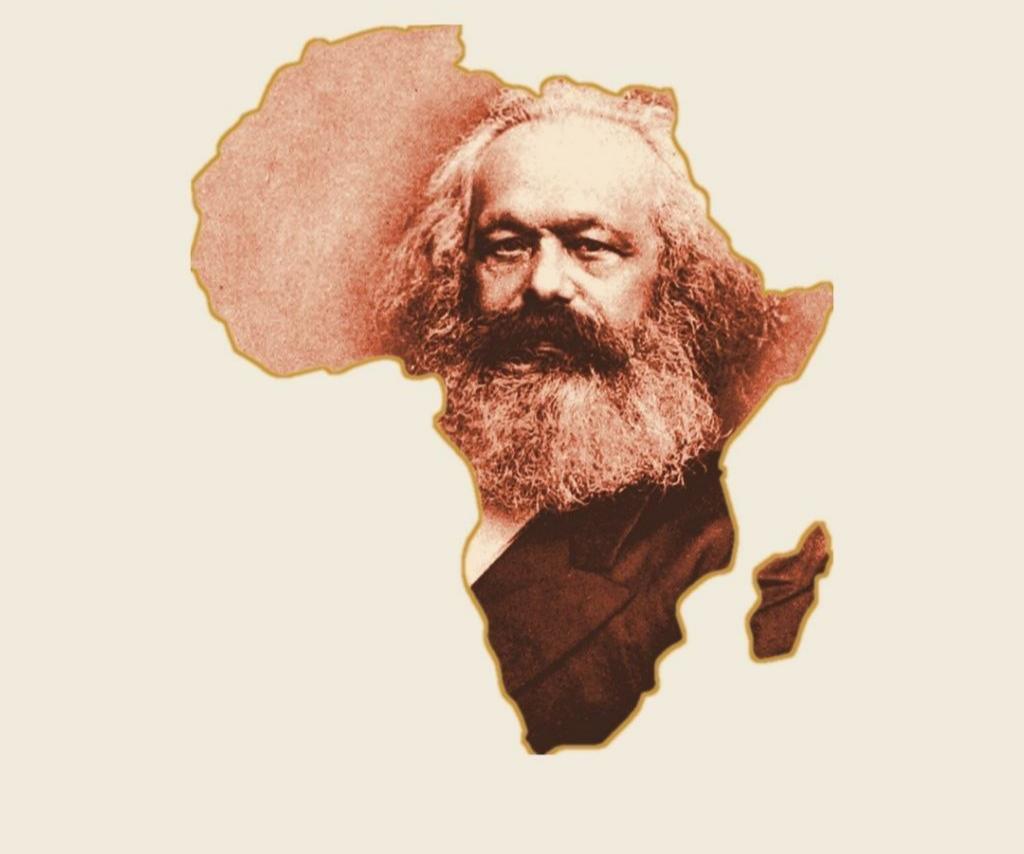
At its heart, Marxism is a revolutionary philosophy developed by Karl Marx and Friedrich Engels — as well as other Marxists who have contributed to its development — that seeks to understand human society through our shared social relationships.
It begins with a basic fact: human beings must interact with nature to survive.
This interaction, our collective ability to labour and transform nature, is the foundation of human social life. Through work, we transform the natural world, creating our phones, the infrastructure that powers them, and our everyday lives. And in the process, we also transform ourselves.
This is the core of Marxist philosophy: materialist dialectics.
It is a philosophy of human history, labour, and change. It views the material world as “nature-as-transformed-by-centuries-of-human-labour.”
This is the first and most important point: Marxism is a philosophy that studies all of humanity and our shared social relations. It equips the working classes of the world with the tool for changing the world.
Class Struggle Drives History
This philosophy gives us the tools to understand how society is organized and how it changes.
The driving force of this change, for Marx, is class struggle: the conflict between those who control the means of production (the tools, factories, and resources) and those who do not.
This makes Marxism a universal means of understanding social reality.
To understand any society, we must look at its material conditions — how people produced what they needed to survive, how it was shared, and who controlled it.
This is the essence of the materialist conception of history, or historical materialism for short. It is the application of Marxist philosophy to history.
By studying the economic and social relationships of the past, we can understand the social and political structures, culture, and laws of any society, whether ancient empires or modern nations.
The Hidden Cost: Alienation
It is also within this framework that Marx developed his critique of capitalism, the growing economic system of his time that has now become the dominant system across the globe, including Nigeria.He studied its inner workings, revealing its deep contradictions and its natural tendency to create and reproduce inequality.
The concept of alienation — the feeling of being disconnected from our work, from ourselves, and from other people — is a direct result of a system where workers are treated as mere objects.
This was one of Marx’s most important discoveries about capitalism, and this is precisely where Marxism’s universal power becomes most clear for nations like Nigeria.
Imperialism Explains the Comprador Class
Capitalism has evolved into its highest and most destructive stage: imperialism.
This is not simply a foreign policy choice but a built-in need for capitalist economies to find new markets and sources of cheap labour and raw materials.
For Nigerians, Marxism helps us understand why the local political elite acts the way it does.
This is important. While it is fair to say that Nigerian elites are corrupt, it is not just corruption or lack of morals that drives them. Their actions can be understood as the expression of their local comprador bourgeois interests.
They are a class that acts as a middleman for global capital, making money from the extraction of Nigeria’s resources while keeping most of the population poor.
The economic and political instability, the conflicts over oil, and the failure of development to help the masses are not accidents. They are symptoms of Nigeria’s position within the global capitalist system — a system Marxists have analyzed, predicted and explained.
A Diagnosis — And a Roadmap
Therefore, Marxism provides a scientific diagnosis of Nigeria’s social problems.
It gives us more than just criticism. It gives us the tools to take apart the exploitative structures that hold the country back.
This is what makes Marxism a practical guide: Marxist philosophy gives us a clear way to see the world, understanding that reality is material and shaped by human action.
The Marxist critique of political economy analyzes capitalism, showing how profit comes from the unpaid work of workers and how the system turns into monopolies working closely with the state.
Scientific socialism then offers a roadmap. It shows us the historical role of the working class and how a socialist revolution can build a new society based on human need — as Marx puts it, a society where the “free development of each is the condition for the free development of all,” not private profit.
A Tool for Liberation
Marxism is a global science of social emancipation. It is the study of how humans create their own history, through conditions “not of their own choosing.”
For Nigerians, this science is a lifeline. It allows us to understand why our reality is the way it is and gives us the clarity and the tools to fight for a new one.
It moves us beyond simple accusations of “corruption” to a profound understanding of the systemic nature of our oppression, thereby empowering us to build a better society that benefits all Nigerians, not just a privileged few.
Marxism is, therefore, not alien to Africa; it is a necessary tool for its liberation.