#EndSARS: What the Streets Taught Us
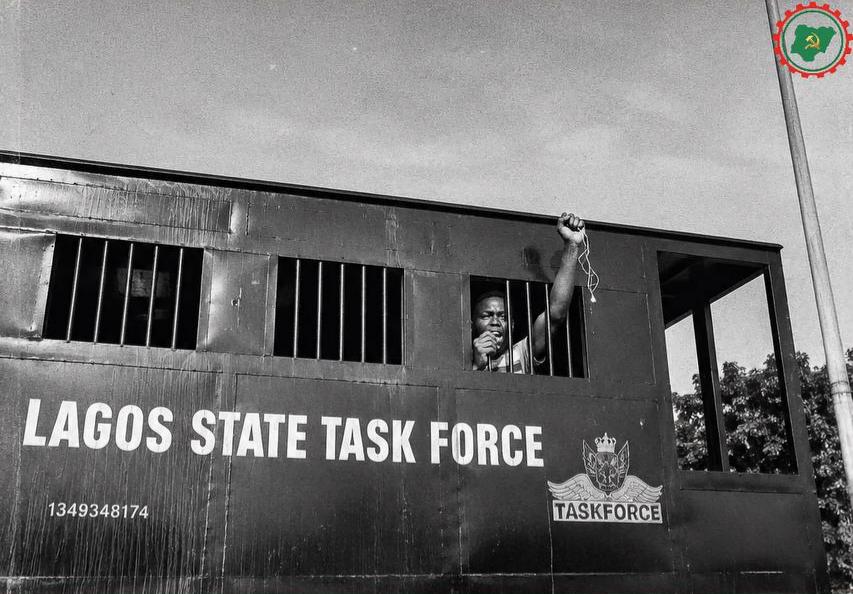
In October 2020, Nigeria’s streets became the battleground of a generation that had had enough. Enough of police brutality, enough of extortion, enough of arbitrary arrests, and the daily humiliation of living under a repressive state. A viral video from Ughelli, Delta State, showing security operatives shooting a young man and driving away in his vehicle, reignited years of anger against the Special Anti-Robbery Squad (SARS). From Lagos to Abuja, Port Harcourt to Kano, thousands poured into the streets. Protests spread across at least 25 states, with more than 180 demonstrations recorded in October alone, and what began as a demand to abolish a notorious police unit soon became one of the most significant expressions of mass resistance in recent Nigerian history.
The government, in response, offered empty promises of reform. But on 20 October, security forces opened fire on protesters at Lekki Toll Gate and Alausa in Lagos. Amnesty International reported that at least 12 people were killed at the two locations. The violence exposed a bitter contradiction: a government claiming to protect its citizens was prepared to unleash violence against those demanding protection from its police.
Yet this contradiction raises a more fundamental question. What exactly are the police protecting, and what class interests does the state ultimately serve?
A Generation Takes to the Streets
We are constantly told that Nigerians are too docile, too divided, or too resigned to their suffering to fight back. October 2020 once again shattered that naive refrain. It reminded us that beneath the apparent calm of everyday life lies an anger that can erupt into collective resistance.
The significance of #EndSARS went far beyond opposition to one police unit. For millions of young Nigerians facing unemployment, poverty, economic insecurity, and dwindling opportunities, police brutality was another expression of a society organised against their interests.
There is an important point of attention here. The police cannot be understood simply as an institution that occasionally abuses its powers. They are part of the coercive machinery of the state, which maintains the existing social order. Under capitalism, that order rests on private ownership, class inequality, and the concentration of economic and political power in the hands of a minority. The police enforce the laws and property relations upon which that order depends, even as they perform ordinary functions of crime prevention and public safety. Police violence must be understood within a wider system in which the state possesses the organised means of coercion, while the poor and working masses bear its harshest consequences.
#EndSARS brought these contradictions into the open. Across ethnic and religious divisions, young Nigerians recognised a common enemy in an institution that routinely violated their dignity. For a moment, the streets revealed a different possibility: people acting collectively rather than suffering individually.
And the state struck back with its armed body of men…rather desperately.
The Struggle Endures
On 11 October 2020, the government announced the dissolution of SARS. It was not the first such announcement, and protesters had good reason to distrust it. Disbanding a police unit was one thing; dismantling the conditions that enabled its brutality was another.
This is the contradiction that confronts struggles that stop at reforms. The state can concede a demand without surrendering the power that makes the injustice possible in the first place.
But it would be dishonest to conclude that #EndSARS achieved nothing. The movement demonstrated remarkable organisational capacity through fundraising, mutual aid, legal assistance, and coordination across the country. It forced police brutality into national and international consciousness and challenged the widespread belief that ordinary Nigerians were incapable of collective resistance.
The limitations of the movement were not a question of insufficient courage. Rather, it revealed the distance between challenging an institution and confronting the social and political order that sustains it. A movement united in opposition to police brutality did not necessarily share a political programme for transforming the state itself.
And therein lies a lesson worth confronting: if the institutions responsible for oppression remain intact, how far can reforms alone take us?
From Resistance to Political Power
The answer to that question is not to dismiss reforms or spontaneous mass movements. Every struggle against oppression matters. But struggles over immediate grievances also create opportunities to ask deeper questions about the society that produces them in the first instance.
Police brutality, unemployment, declining living standards, and the collapse of public services may appear as separate crises. Yet they unfold within the same capitalist system, where enormous wealth exists alongside mass deprivation and where the state repeatedly demands sacrifice from those who possess the least.
Ending police brutality and the numerous contradictions of the Nigerian state, demands an economy organised around human need rather than private profit, with democratic public control over society’s major resources, decent employment, and universal access to quality education, healthcare, and housing. This is what the struggle for socialism must mean in concrete terms.
Connecting these struggles requires more than anger. It requires a political understanding of class power and an organisation capable of translating that understanding into collective action.
This is why revolutionary organisation matters. Not because revolutionaries can manufacture movements or substitute themselves for the masses, but because political organisation can help turn the lessons of struggle into a conscious programme for social transformation. It is towards this end that The Naija Marxists is organising: to contribute to building a revolutionary movement capable of connecting the everyday struggles of the Nigerian masses to the wider struggle for socialism.
Six years after #EndSARS, the question is not whether Nigerians have the courage to resist. They do. Undoubtedly. Nor should we remember the movement only through the tragedy of its repression. We must remember the solidarity, the defiance, and the extraordinary possibility glimpsed when ordinary people discovered their collective strength.
The streets taught us that the masses can challenge power of the state head on. The question history now places before us is how that power can be taken out of the hands of those who wield it against us.