African Liberation Day, 2026: Independence Is Not Liberation
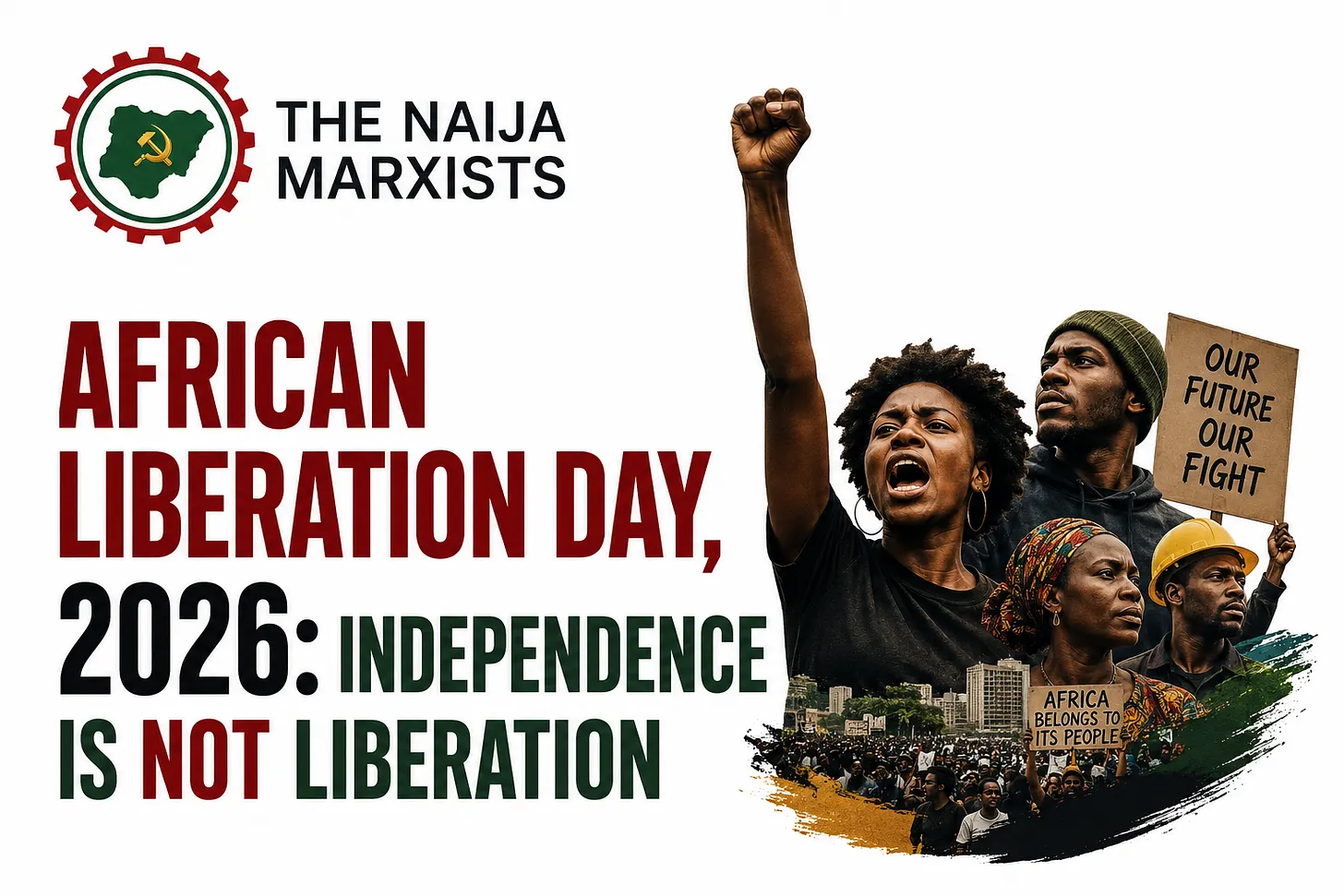
African Liberation Day marks a transfer of political administration. In some countries that transfer required armed struggle, and the movements that fought for it, in Algeria, Kenya, Angola, Mozambique, Guinea-Bissau, were met with extraordinary violence before the departing powers relented. In most cases independence was negotiated, because the colonial powers calculated that a managed handover of formal governance was less costly than continued occupation and would preserve what actually mattered: the economic relationship. The constitutional arrangements that governed independence were frequently drafted or shaped by the departing powers. The French CFA franc kept francophone Africa bound to Paris. British commercial interests were protected by treaty. The colonial state did not withdraw. It restructured.
Sixty-three years later, the results of that restructuring are visible in every direction. Wars consuming the Sahel and eastern Congo. Austerity programmes administered by institutions whose largest shareholders sit in Washington and Paris. Public hospitals without basic supplies in countries that sit on enormous mineral wealth. A handful of billionaires accumulating at rates that would have been recognisable to any colonial administrator, while the people who produce the wealth that makes this accumulation possible remain dispossessed. To understand why, it is necessary to understand what capitalism is and how it operates, not as a general description of greed or inequality, but as a specific system with specific internal laws that produce these outcomes as a matter of course.
The Logic of Capital
Capitalism is a mode of production organised around a specific class relation. Those who own the means of production, the land, the factories, the mines, the infrastructure, constitute one class. Those who own nothing but their capacity to work and must sell that labour to survive constitute another. When the worker labours, the value produced exceeds the value of the wage paid. That difference, what Marx called surplus value, is appropriated by the owning class. It is the source of profit, of interest, of rent, of all the forms in which the owning class accumulates. This is not capitalism distorted or corrupted. It is capitalism functioning exactly as its internal logic requires.
As capital accumulates within a given economy, a problem emerges from within the system itself. Competition between capitalists intensifies. Each tries to reduce costs, primarily by replacing labour with machinery, because labour is the source of surplus value but also the largest cost. But as more machinery is introduced relative to labour across the economy, the proportion of production that generates surplus value shrinks. The rate of profit tends to fall. This is not a crisis of mismanagement. It is a structural tendency Marx identified in Capital, and it drives capital to seek solutions outside the boundaries where it has already accumulated. New markets. Cheaper labour. Raw materials that can be extracted at lower cost than domestic production allows. The export of capital abroad is not the expression of national aggression or racial contempt. It is capital responding to its own internal pressure.
Lenin developed this analysis in Imperialism, the Highest Stage of Capitalism, written in 1916. By the late nineteenth century, capitalism in the industrialised centres had reached a stage where free competition had given way to monopoly. Banks and industrial corporations merged into finance capital, concentrating economic power in the hands of a small number of institutions. This finance capital exported itself outward, seeking the rates of return that saturated home markets could no longer provide. Colonies and semi-colonies offered cheap raw materials, cheap labour not yet organised into strong unions, and investment opportunities in infrastructure, plantations, and extraction that generated profits unavailable at home. The division of the world among the major capitalist powers was the political expression of this economic competition. Imperialism was not a policy choice. It was a stage of capitalist development.
What Independence Changed, and What It Did Not
This mechanism did not end with formal independence. The economic structures built during the colonial period, the railways running to ports rather than connecting African cities to each other, the mono-crop agricultural systems producing for export rather than domestic consumption, the mining operations owned by foreign corporations, the financial systems integrated into London and Paris rather than into each other, remained in place after the flags changed. Capital continued to flow outward. The terms on which African states could borrow were set by institutions controlled by the major capitalist powers. Structural adjustment programmes imposed through debt conditionalities dismantled what public industry existed, liberalised trade in ways that destroyed domestic manufacturing competing with cheaper imports, and privatised assets at prices reflecting the desperation of states with no alternative. These are not the results of bad decisions by individual governments. They are the results of the class position of African states within global capitalism, as territories integrated into the system on terms set by those who hold capital, not those who hold labour.
The class that inherited state power at independence was not in a position to alter this, and in most cases had no interest in doing so. The nationalist movements that won independence drew their leadership from lawyers, military officers, civil servants trained under colonial administration, merchants whose commercial position depended on the existing trade relationships. This petty bourgeoisie and nascent bourgeoisie inherited states whose economic function was the extraction and export of surplus. Managing that function on behalf of global capital, taking a portion of the proceeds, and disciplining the labour force that made it possible became the organising logic of the post-colonial state. Marxists describe the class that performs this function as a comprador bourgeoisie. It is not a foreign imposition. It is a domestic class whose material interests align with global capital against domestic labour. Dangote and a Lagos factory worker are not on the same side of the class question because both are Nigerian. Their positions in the relations of production are opposed, and that opposition determines their political interests regardless of shared nationality.
What Nkrumah and Cabral Understood
Amilcar Cabral in Guinea-Bissau understood this with particular clarity. His analysis of the class content of the liberation movement engaged directly with the role of the petty bourgeoisie, which provided the educated leadership of anticolonial nationalism across the continent. Cabral argued that this class faced a choice: commit class suicide, genuinely subordinating its interests to those of workers and peasants, or use the liberation movement to consolidate its own position at independence. The trajectory of most post-colonial African states answered the question he posed.
Kwame Nkrumah, writing Class Struggle in Africa in 1970 after the coup that removed him from power, reached the same conclusion from his own experience. His earlier insistence that African society was classless by tradition had been wrong. The bourgeoisie that inherited independence was a real class with real interests opposed to those of African workers. He understood this after his defeat. The cost of understanding it late was the defeat itself.
Race and Class
Capitalism does not care about race. The experience of racial oppression across Africa is real and its consequences are ongoing. But race was an instrument that capital deployed because it was useful, not a principle that organises capital’s operation. It justified dispossession, administered conquered populations, and divided the working class along lines that made collective organisation harder. Where racial ideology became inconvenient for capital, capital discarded it.
The post-apartheid South African economy integrated a Black bourgeoisie into ownership and management while the material conditions of Black working-class life remained largely unchanged, because what capital required was political stability. What capitalism requires in every instance is a class of owners and a class of workers. The racial composition of the owning class is a secondary question. The rate of exploitation is the same regardless.
The radical youth across the continent who are looking for answers to genuine and worsening material conditions are right that something fundamental has failed. Decades of independence have produced billionaires in Lagos, Nairobi, and Johannesburg alongside mass unemployment, collapsed public services, and wars that cannot be ended because too many class interests profit from their continuation. The anger at this is correct. The question is whether it is organised around a framework capable of carrying it toward the actual source of the problem. A politics organised around continental identity or racial solidarity has no mechanism for identifying the African billionaire as a class enemy. It has no criterion for distinguishing between the Lagos factory worker and the owner of the factory, because both are African. Capital benefits from this confusion. An African bourgeoisie that presents itself as the leadership of African people, while extracting surplus from African workers and repatriating it to global capital, requires exactly this kind of politics to sustain its legitimacy.
What Liberation Actually Requires
What African Liberation Day should mark in 2026 is the distance between what independence achieved and what liberation requires. A transfer of political administration is not liberation if the class relations that determine who owns the productive forces, who appropriates the surplus generated by social labour, and who bears the costs of debt and war remain intact. Nkrumah recognised this after his defeat. Cabral said it throughout and was assassinated before he saw independence. The argument has been made before, at considerable cost to those who made it. What it has lacked is the organised working-class political force capable of carrying it beyond argument into practice.
Africa will not be free from war, from austerity, from the permanent subordination of its productive capacity to the demands of global capital, until the working class controls the means of production. That is not a continental demand. It is a class demand — and it is the only one adequate to the actual problem.
We forge ahead as we remember, Africa Liberation Day.
@TheNaijaMarxists